Uzbekistan Calls for Strengthening Climate-Resilient Systems in Central Asia
At the COP31 event in Turkey, Uzbekistan urged the development of cooperation and investments to protect healthcare systems from climate risks.
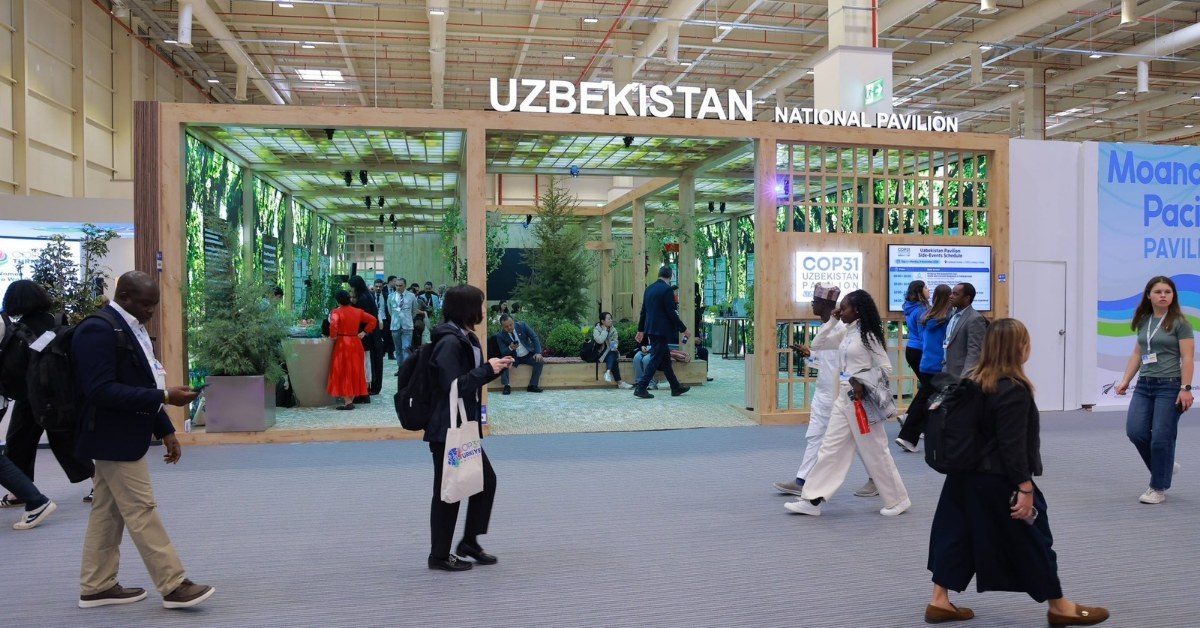
On November 12 in Islamabad, the Pakistani climate analysis center ClimateDataBook published a report on an event held at Uzbekistan’s national pavilion during the 31st United Nations Climate Change Conference (COP31) in Turkey.
The discussion was titled 'From Climate Risks to Climate-Resilient Healthcare Systems: Gender-Responsive Adaptation Financing in Central Asia.' Participants addressed regional cooperation and investment attraction to enhance the resilience of healthcare systems to climate change. Special attention was given to protecting women, children, and other vulnerable groups.
According to the publication, the Global Green Growth Institute (GGGI) and the United Nations Population Fund (UNFPA) signed a memorandum of understanding. The document outlines cooperation in developing climate-resilient healthcare infrastructure, investment planning, and strengthening institutional capacity.
Alisher Salomov, Advisor to the Chairman of Uzbekistan’s National Committee on Ecology and Climate Change, stated that climate change in Central Asia affects not only the environment but also public health and economic development. He also highlighted the consequences of the environmental crisis in the Aral Sea region for human health and the importance of collaboration with GGGI and UNFPA.
As reported in the material, a climate-resilient maternal healthcare model is being developed for Karakalpakstan. Additionally, support measures are planned for women who have lost their jobs due to environmental changes.